Full or Empty
2023. 3. 16. – 4. 9.
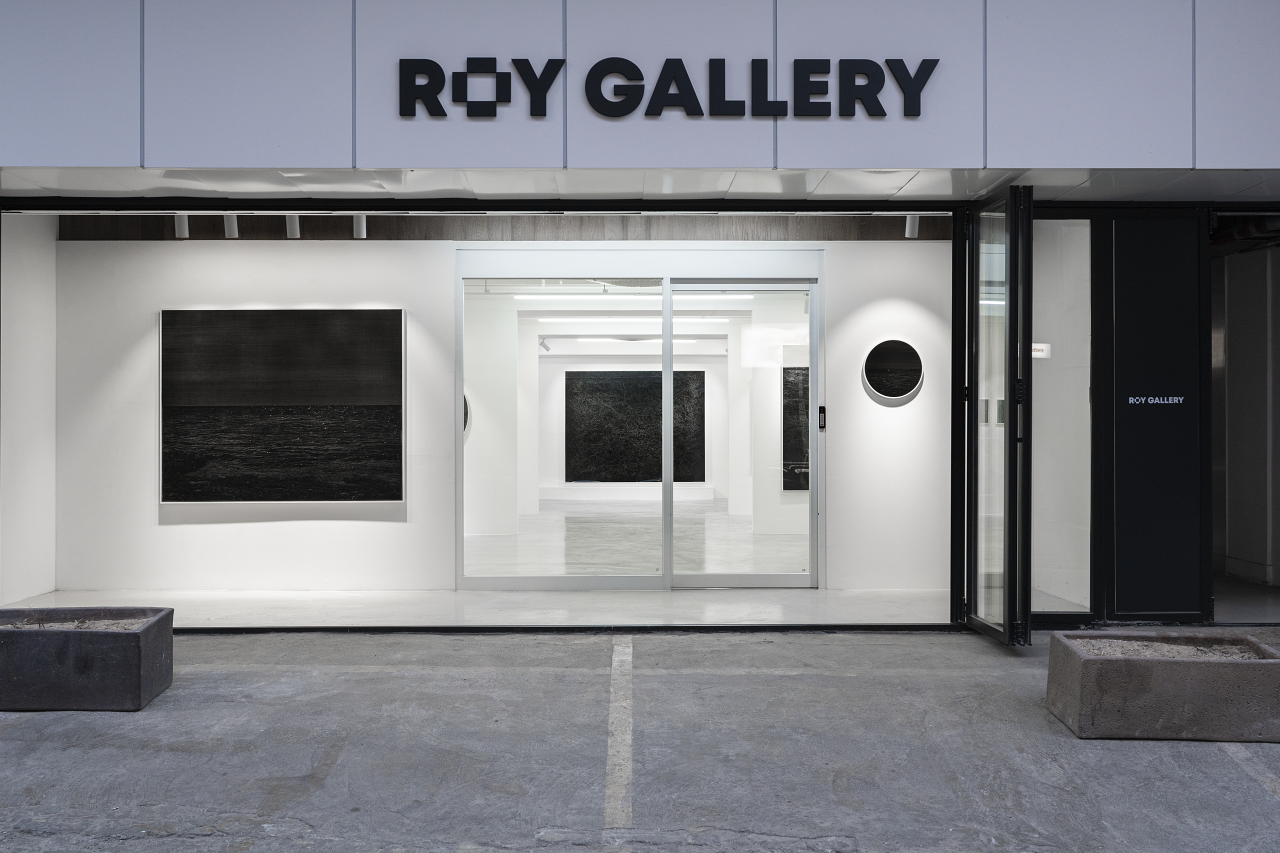
ROY GALLERY (Seoul, Rep. Korea)
Host and Organizer
ROY GALLERY
전시 리뷰 | Review
「김현호의 검은 산수」
김준혁 연구자
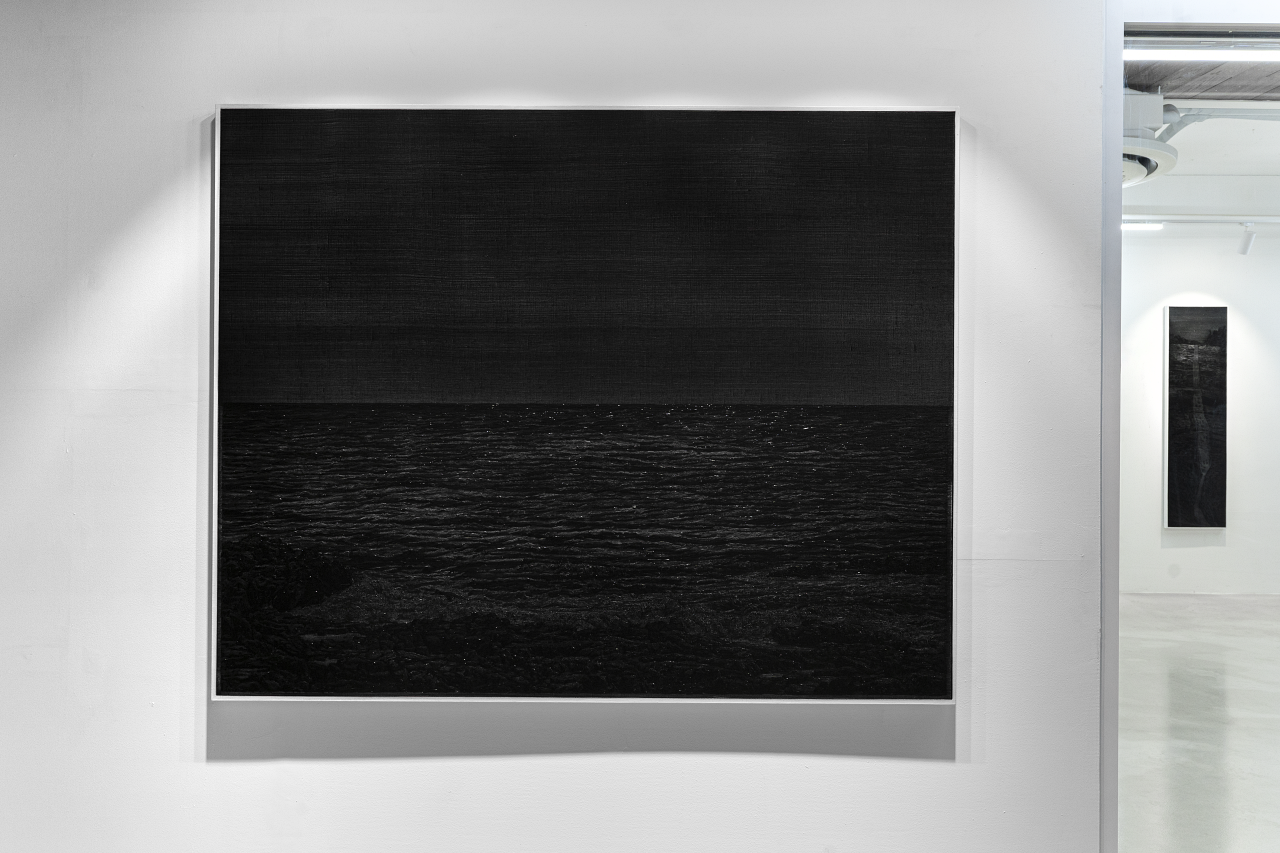
김현호 작가는 달빛을 피해 어둠 속에 몸을 숨긴 산과 바다를 그렸다. 익숙한 산수화지만 이토록 어두운 색칠은 낯설고, 또 익숙한 단색화지만 이토록 분명한 형상은 낯설다. 산수화 대부분은 바탕이 하얗고, 단색화 대부분은 형태가 추상이다. 작가는 산수화를 그리되 하얀 낮이 아닌 검은 밤을 그렸고, 단색화를 그리되 추상이 아닌 산수를 그렸다.
이 그림은 왜 익숙하면서도 낯선 인상을 풍길까? 추측건대 전승 양식의 특징을 잘 따르면서도 작가 고유의 특징을 잘 살렸기 때문일 것이다. 시대가 조선에서 한국으로 변했다. 이에 따라 그림의 바탕도 종이나 비단이 아닌 코튼이나 린넨으로 바뀌었고, 안료의 접착제도 아교가 아닌 린시드와 아크릴로 바뀌었다. 흔히 동양화에서 서양화로 바뀌었다고 말한다.
한동안 우리는 작은 그릇에 서양의 새것을 담기 바빠 우리의 옛것을 담지 못했다. 뒤늦게나마 담은 우리의 옛것이 절제로 만든 검소와 여백의 미감이었다. 그림에 한 가지 색깔만 칠한 단색화는 그렇게 등장했다. 한때 자연을 그린 산수화가 우리 그림의 주류를 이루었듯, 또 한때는 하나의 색만 칠한 단색화가 우리 그림의 주류를 이루었다. 그리 오래지는 않았지만, 지금 그림을 그리는 사람에게 단색화는 산수화와 같은 전승 양식 중 하나일 것이다.
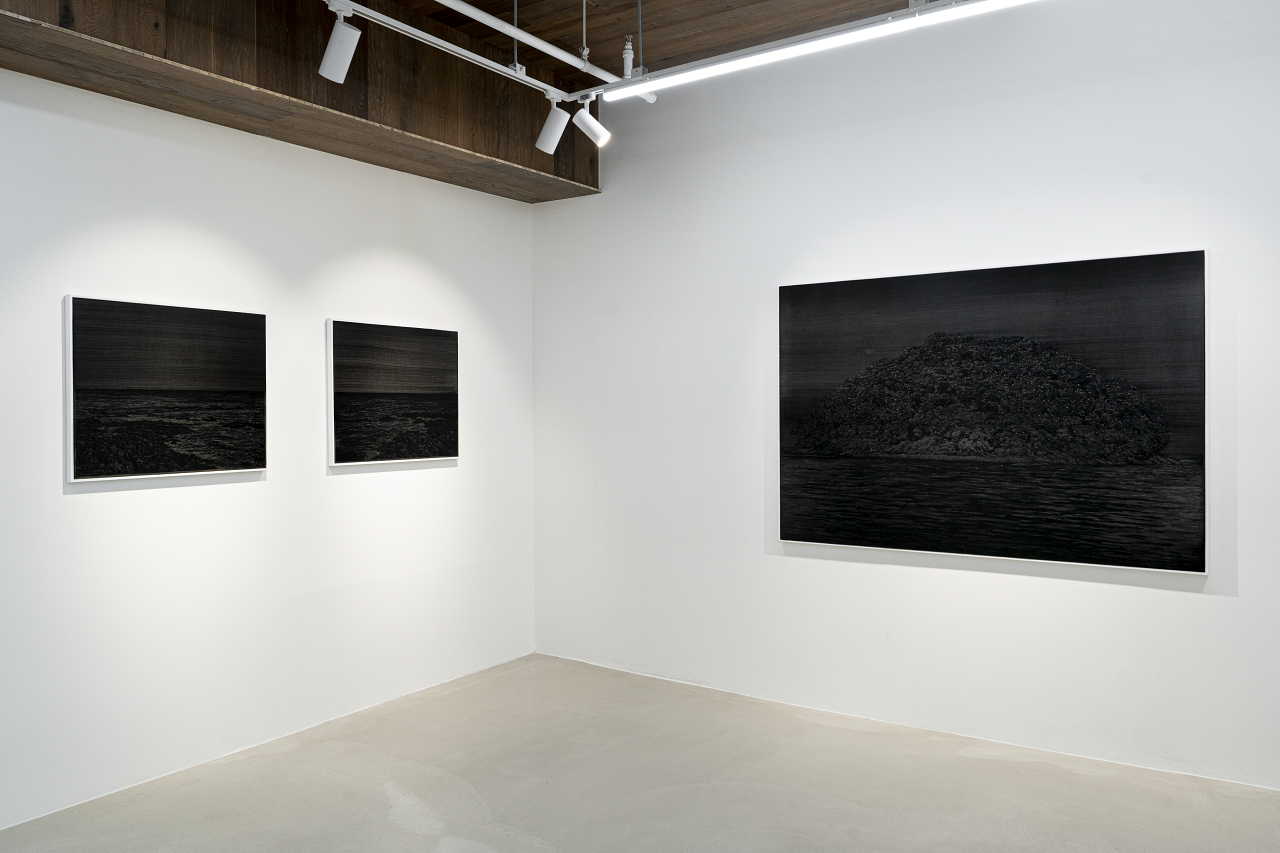
김현호의 그림이 익숙한 이유는 단색화의 미감을 가졌기 때문이고, 그러면서 또 낯선 이유는 그 속에 산수화를 함께 담았기 때문이다. 넓고 얇은 한 번의 붓질로 하늘을 그렸고, 좁고 두꺼운 여러 번의 붓질로 산과 숲 그리고 계곡과 폭포 또 섬과 바다를 그렸다. 종이나 비단에 물이나 아교로 칠했다면 색의 짙고 옅음을 조절하는 방식으로 산수를 그렸을 것이다. 하지만 캔버스에 아크릴로 칠했기 때문에 칠의 밀도와 두께를 조절하는 방식으로 산수를 그렸다.
자연이 아름답다고 느낄 때면 옛사람들이 왜 자연을 그렸는지 가늠할 수 있었다. 감정은 사라지는 것이라 그림으로 기록하여 붙잡아 두고 싶었을 것이고, 그때는 감동을 전할만한 자연이 많아서 산수화도 많았을 것이다. 지금은 왜 그때처럼 산수화를 그때처럼 많이 그리지 않을까? 아름다운 자연을 마주할 겨를이 없거나, 아니면 아름다운 자연 자체가 없어서 그럴 것이다.
김현호의 산수화는 아주 검다. 자연에서 검은색을 얻는 방법은 무엇인가를 태우는 방법뿐이다. 먹과 묵, 유연묵과 송연묵, 목탄과 흑연, 본 블랙과 램프 블랙, 카본 블랙과 바인 블랙 그리고 아이보리 블랙. 이름은 저마다 다르지만, 모두 식물이나 동물 그리고 광물의 일부를 태워서 만들었다는 점이 같다. 오래전부터 숲이 불에 타 없어지고 있다는 말을 익히 들었다. 불과 100년 만에 우리는 지난 9,000년 동안 없어진 만큼의 숲을 잃었다고 한다. 그래서인지 지금 산수를 표현한다면 옛날과 달리 맑은 푸른색보다 짙은 검은색으로 칠함이 자연스러운 듯하며, 명암의 강한 대비로 나타낸 분명한 형상보다 약한 대비로 나타낸 희미한 형상이 자연스러운 듯하다. 모두 불에 타 없어지고 검은 재로만 남았기 때문이다.
재료와 기법 그리고 양식과 형상 또 주변의 변화가 잘 담긴 작품이다. 그런 작품을 만났다는 사실이 반가워서 이렇게 감상을 남긴다.
Kim Hyunho’s Black Sansuhwa
Kim Junhyuk Researcher
Kim Hyunho paints mountains and seas that conceal themselves in darkness, avoiding moonlight. They are familiar Sansuhwa[1], yet the depth of darkness feels unfamiliar; familiar Dansaekhwa[2], yet the clarity of form feels equally unfamiliar. Most Sansuhwa are set against white grounds, and most Dansaekhwa tend toward abstraction. Kim paints Sansuhwa not in the white light of day but in the blackness of night, and he paints Dansaekhwa not as abstraction but as landscapes.
Why do these paintings feel both familiar and strange at the same time? One might assume it is because they faithfully follow inherited conventions while clearly asserting the artist’s own distinct sensibility. As the era shifted from Joseon dynasty (1392–1910) to modern Korea, the ground of painting changed from paper or silk to cotton or linen, and the binding agents of pigments shifted from animal glue to linseed oil and acrylic. This transformation is commonly described as a shift from Eastern to Western painting.
For a long time, we were so preoccupied with fitting Western novelties into small vessels that we failed to contain our own traditions. What we eventually recovered—albeit belatedly—were the aesthetics of restraint, frugality, and emptiness. Dansaekhwa emerged from this context. Just as Sansuhwa once formed the mainstream of Korean painting, and later Dansaekhwa did the same for a time, Dansaekhwa today may be understood by contemporary artists as one of several inherited traditions, comparable to Sansuhwa.
Kim Hyunho’s paintings feel familiar because they embody the aesthetic sensibility of Dansaekhwa, yet unfamiliar because they simultaneously contain Sansuhwa. Broad, thin brushstrokes render the sky, while narrow, thick, repeated strokes construct mountains, forests, valleys, waterfalls, islands, and seas. Had these landscapes been painted with water or animal glue on paper or silk, their forms would have emerged through variations in tonal density. Instead, painted with acrylic on canvas, they are formed through adjustments in the density and thickness of the paint itself.
When one encounters nature as beautiful, it becomes easier to understand why painters of the past depicted it. Emotions are fleeting, and painting may have served as a means to record and preserve them. Perhaps there was simply more nature worthy of wonder then, which is why so many landscape paintings were made. Why, then, are landscapes no longer painted as abundantly today? Either we no longer have the time to encounter beautiful nature, or such nature itself has largely disappeared.
Kim Hyunho’s landscapes are profoundly black. In nature, black is obtained only through burning. Ink, soot ink, pine-soot ink, charcoal, graphite, bone black, lamp black, carbon black, vine black, ivory black—though their names differ, all are produced by burning parts of plants, animals, or minerals. For years, we have heard that forests are disappearing due to fire. In just the past century, humanity has lost as much forest as had vanished over the previous 9,000 years combined. Perhaps this is why, when depicting landscapes today, it feels more natural to paint them in deep black rather than clear blue, and to render forms with weak contrasts and hazy outlines rather than sharp chiaroscuro. Everything has burned away, leaving only black ash.
These works hold within them materials, techniques, styles, forms, and the changes of the surrounding world. Encountering such paintings feels deeply gratifying, and for that reason, I leave this reflection here.
[1] A traditional East Asian genre of painting depicting mountains and water, not as literal landscapes but as a philosophical and experiential rendering of nature, closely tied to contemplation, immersion, and the ideal of wa-yu (臥遊, “traveling while lying down”).
[2] A Korean art movement that emerged in the 1970s, characterized by the repetitive application of a single color—often white, black, or earth tones—emphasizing materiality, process, and the physical act of painting over representation.
서문 | Preface
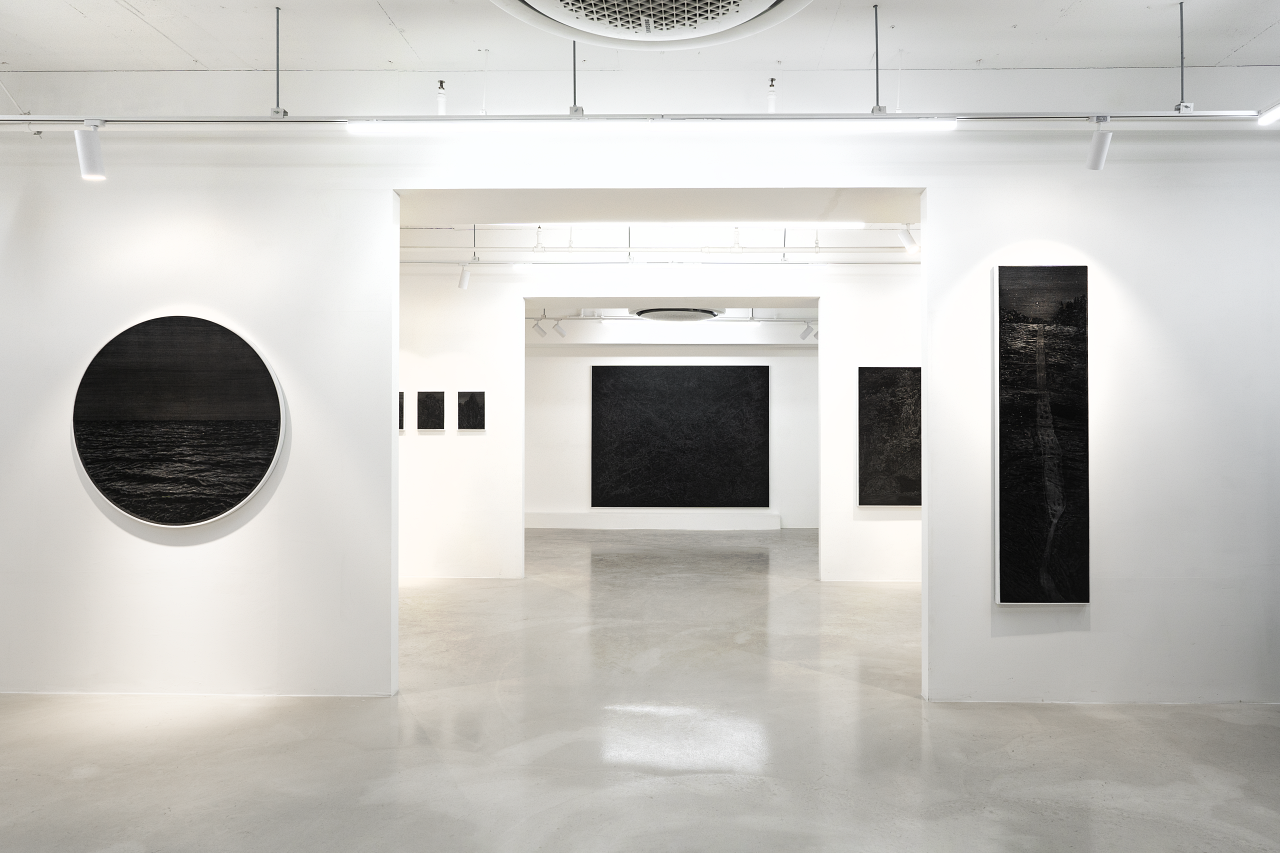
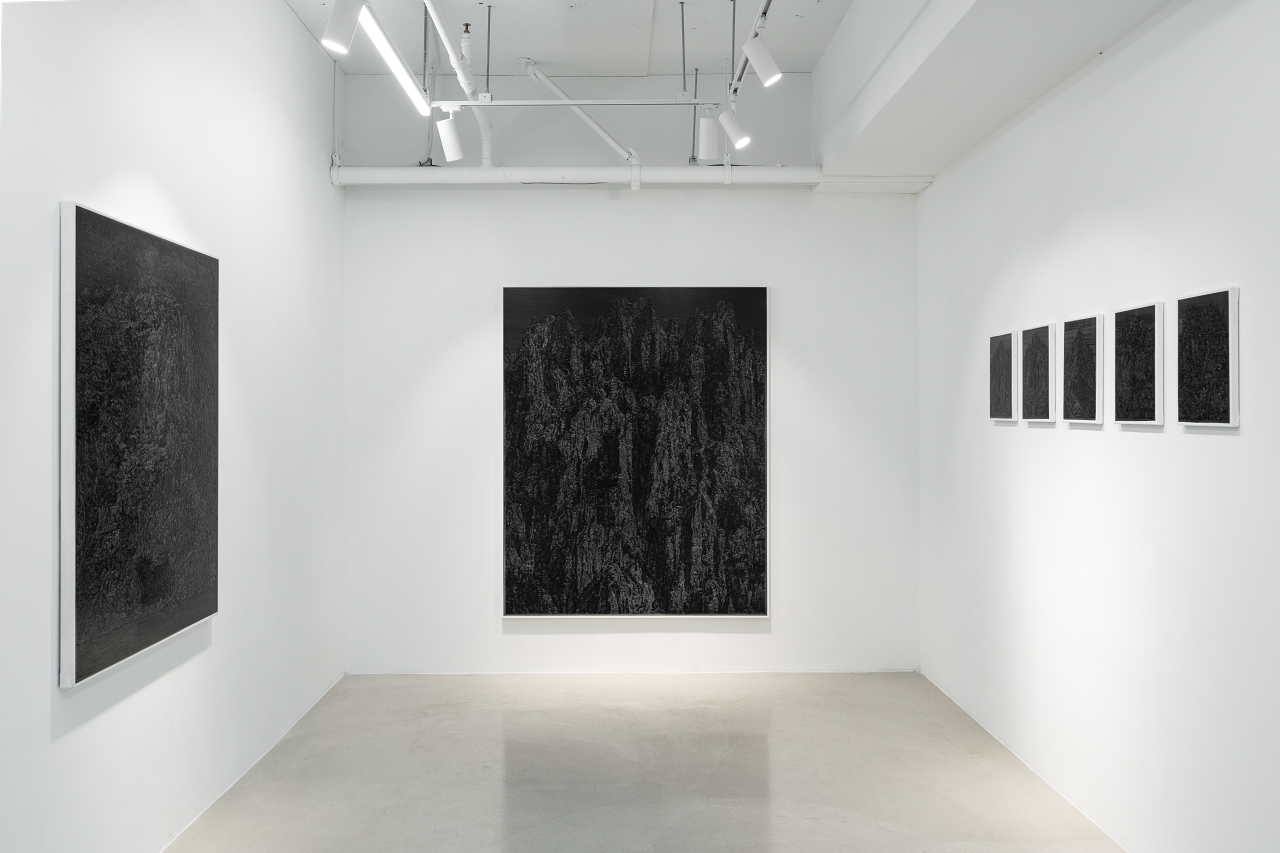
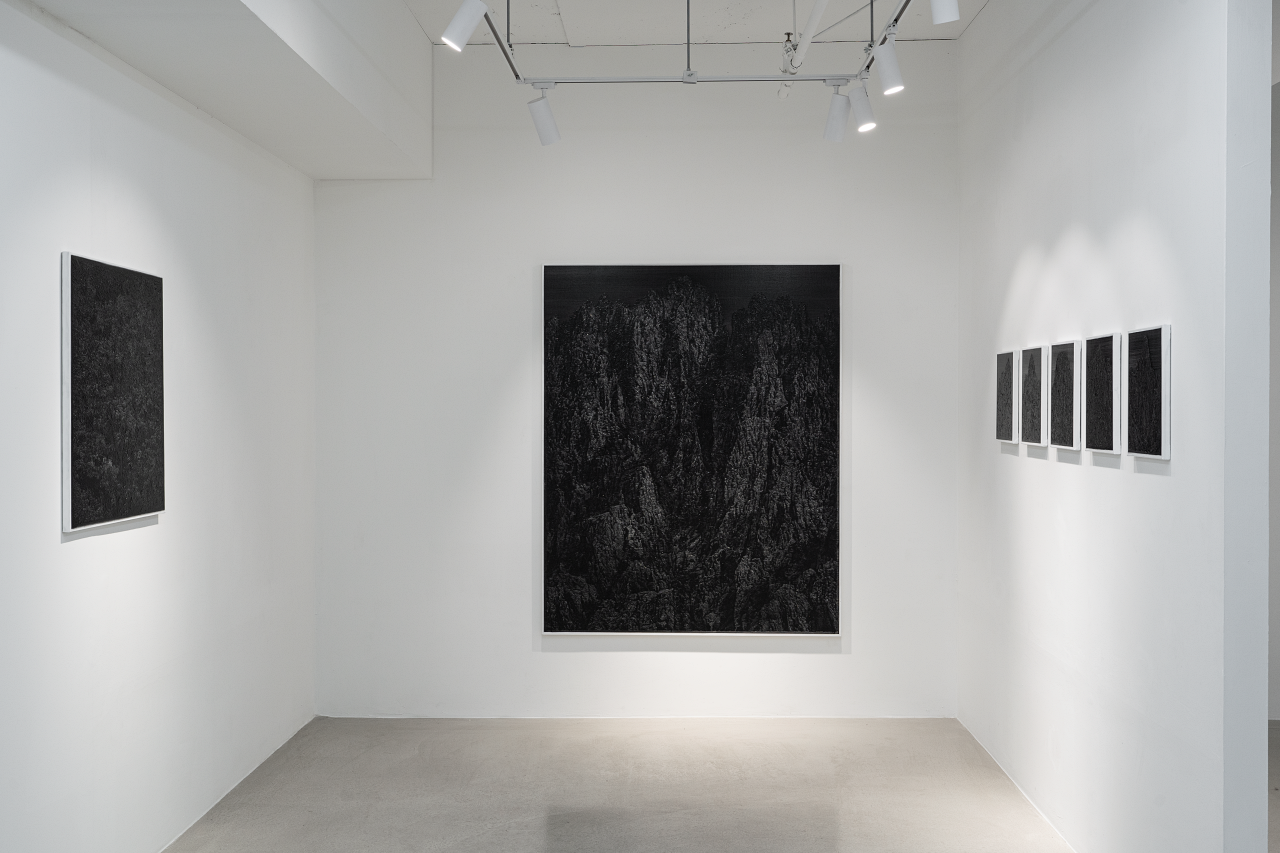
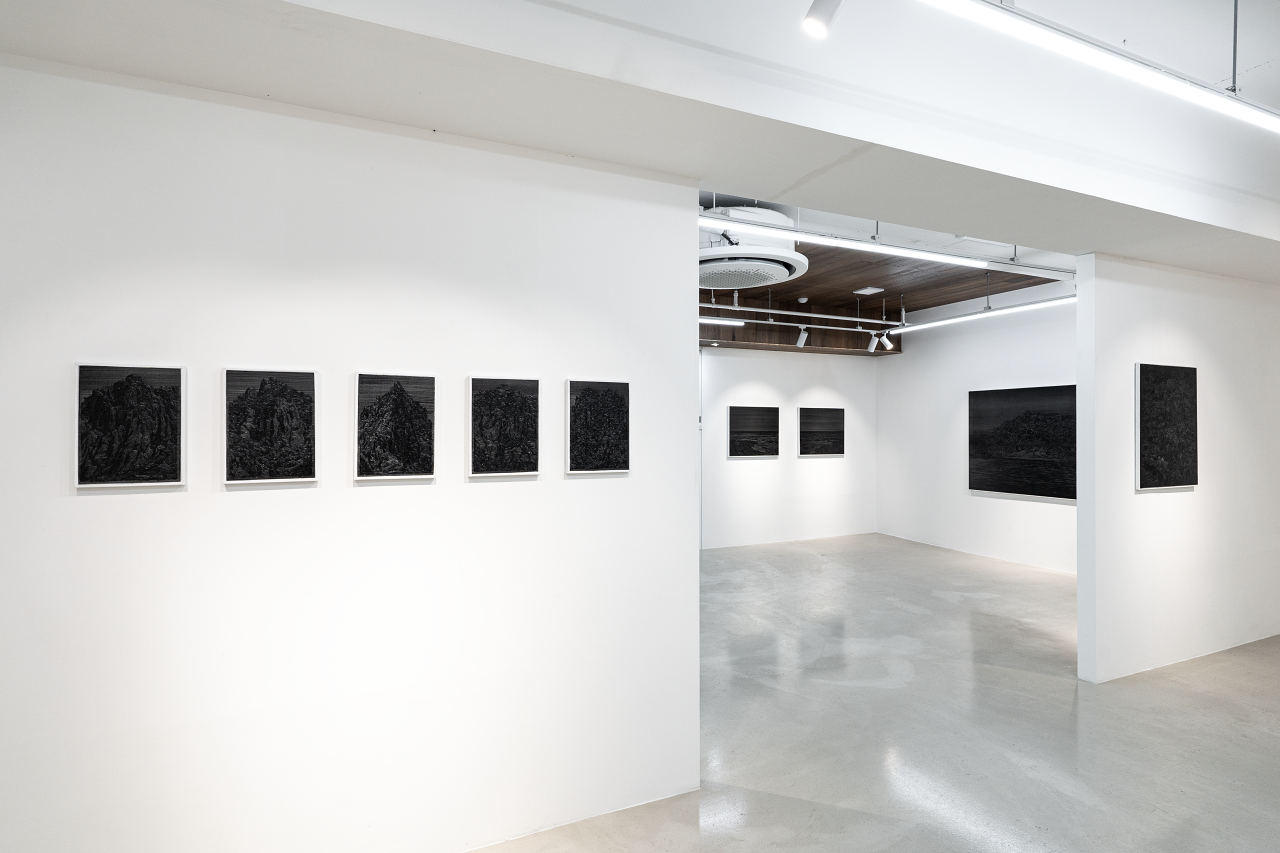
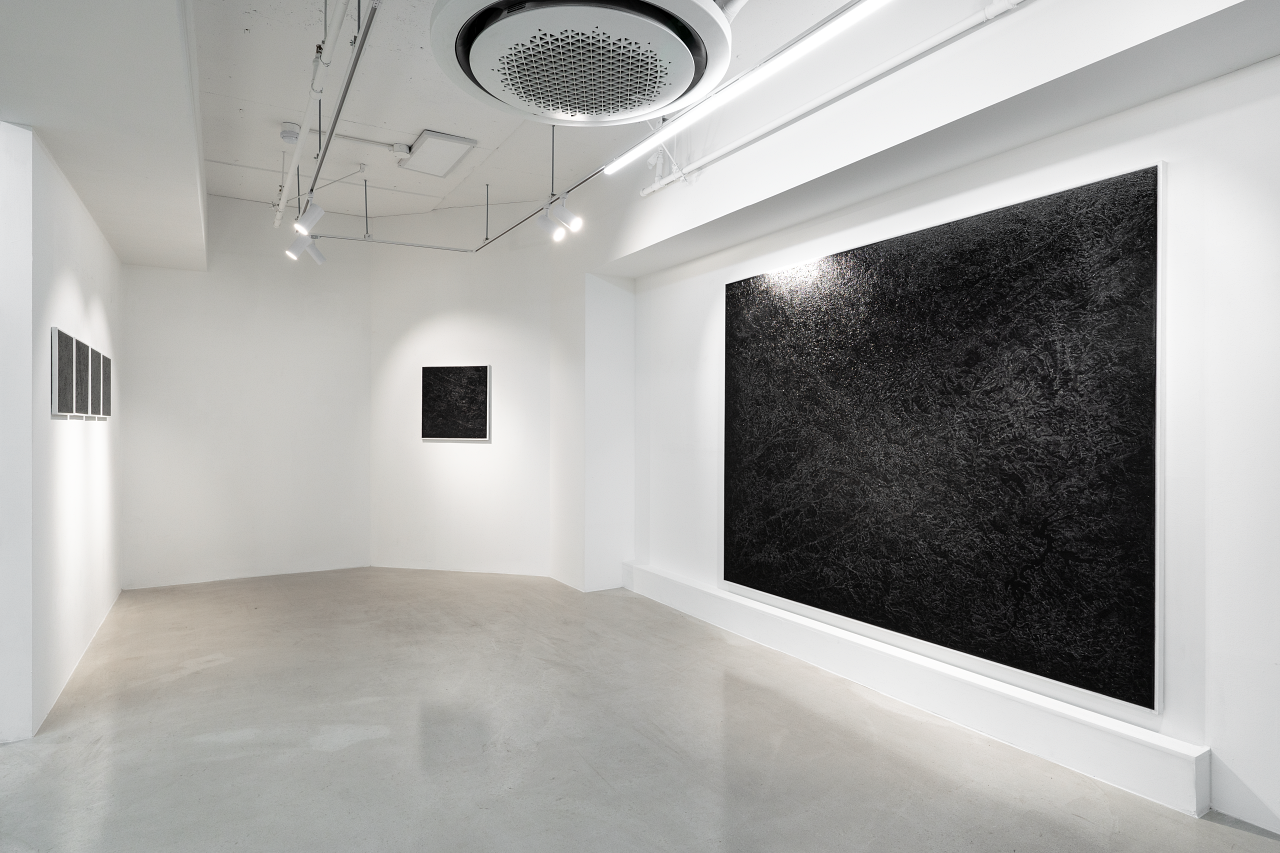
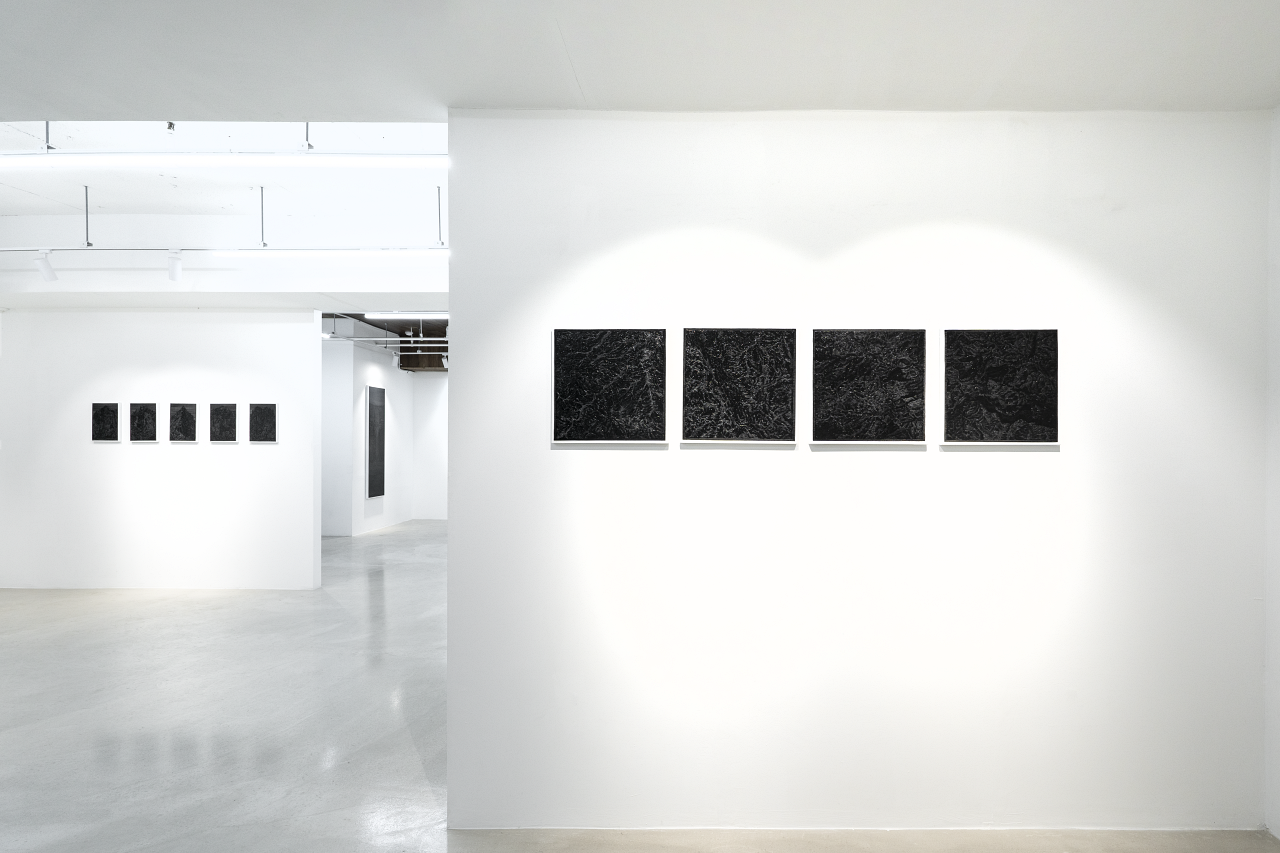
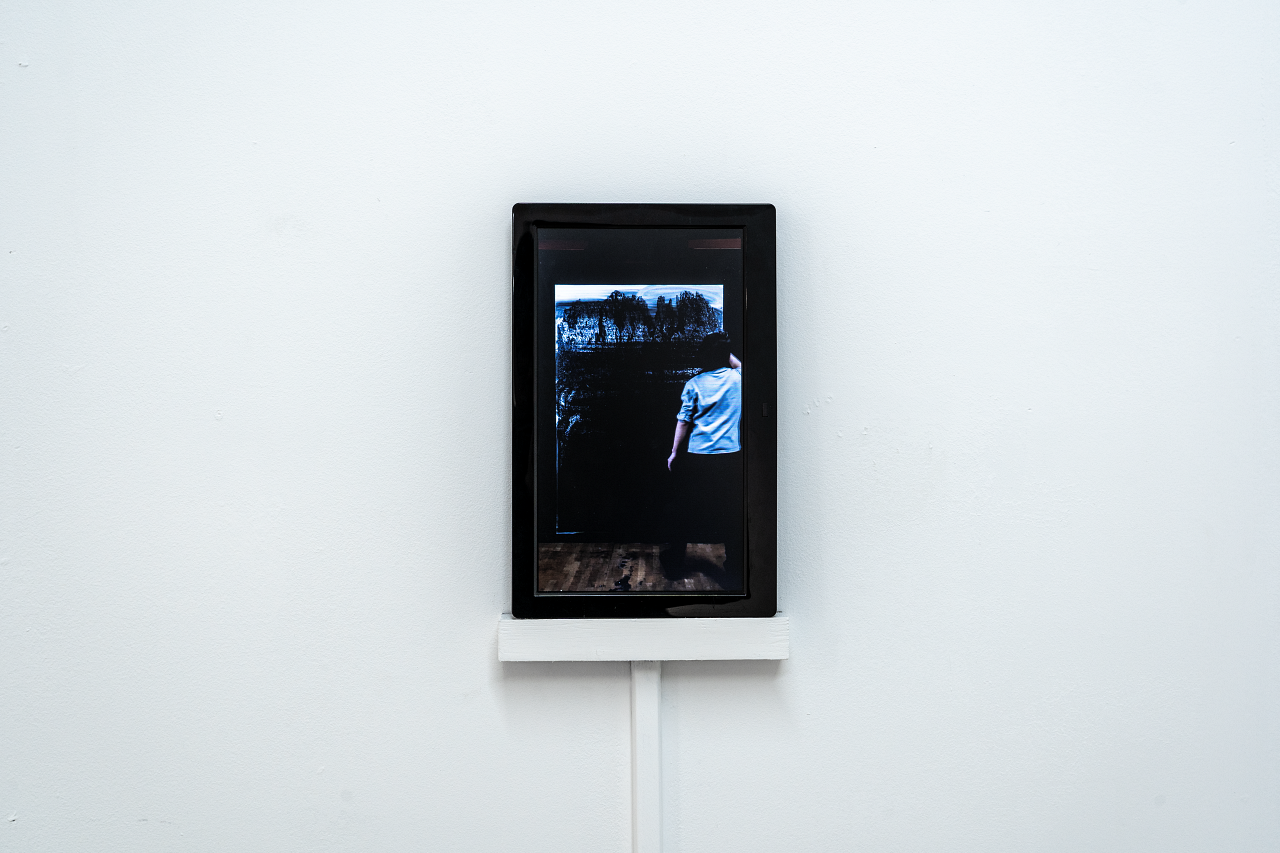
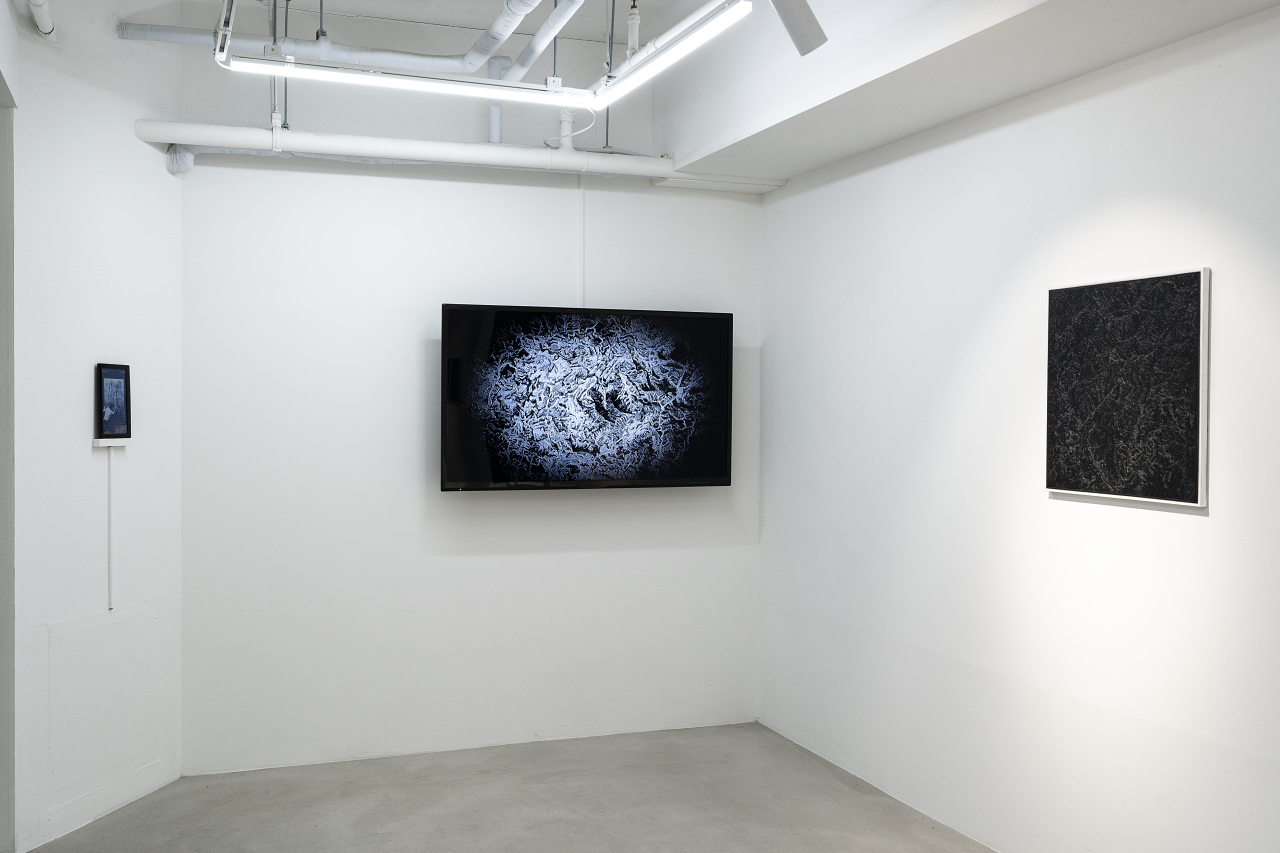
로이갤러리에서 열리는 김현호 작가의 개인전 《Full or Empty》는 작가의 프로젝트인 한국화의 경계를 확장하는 ‘그림연구’ 중 최근 신작을 위주로 선보이는 전시이다. 작가는 카메라로 담기 어려운 검은 그림을 통해 신체적으로 경험해야 비로소 보이게 되는 그림을 관객들에게 보여주고 있다. 한국화를 전공한 작가는 만물의 색을 상징하는 현(玄)색 즉 먹색의 의미와 마띠에르 표현이 가능한 아크릴 물감의 두께를 살려 회화의 평면성보다 촉각성을 강조해 마치 부조와 같은 회화를 제시한다. 관객은 바로 보이지 않는 검은 그림을 자세히 보기 위해 가까이 다가가지만 가까울수록 대상을 인지하기 어려워 다시 거리를 두고 작품을 감상하게 된다. 이처럼 몸을 앞, 뒤, 옆으로 옮겨가며 시간을 두고 작품을 경험하게 하는 감상법은 한 시점에서 모든 것을 인식할 수 있는 평면 회화를 보는 방식과는 사뭇 다르다.
작가가 그린 검은 자연 풍경은 자연을 방 안으로 들여와 즐기기 위해 산수를 그리고 벽에 걸어 감상하는 ‘와유’의 정신이 깃들어 있다. 그의 그림은 가득 ‘채운’ 검은 그림처럼 보이지만 동시에 ‘비어있는‘ 풍경을 통해 감상자가 작품 속으로 개입할 공간을 마련하는 것이 특징이다. 명확하게 그려진 또는 표현된 대상을 관객에게 전달하며 말을 건네는 것이 아닌 전하고 싶은 말을 모두 꺼내었다 도로 덮어두고 마주한 상대의 말을 들을 준비가 되어있는 그림이라 할 수 있겠다. 켜진 실내등을 껐을 때, 갑자기 빛이 사라진 주변은 아무것도 보이지 않지만 시간이 지나 어둠에 익숙해질 즈음 슬며시 주위가 인식되기 시작한다. 빛이 사라진 어둠 속은 아무것도 보이지 않아 텅 비어있지만, 우리의 눈이 어둠에 서서히 익숙해지면서 주변의 하나, 하나가 보이기 시작한다. 가장 큰 실루엣에서부터 점차 세밀하게 대상이 보이는 순간 우리는 보이지 않음의 공포에서 인식할 수 있음에서 오는 안도감에 도달한다.
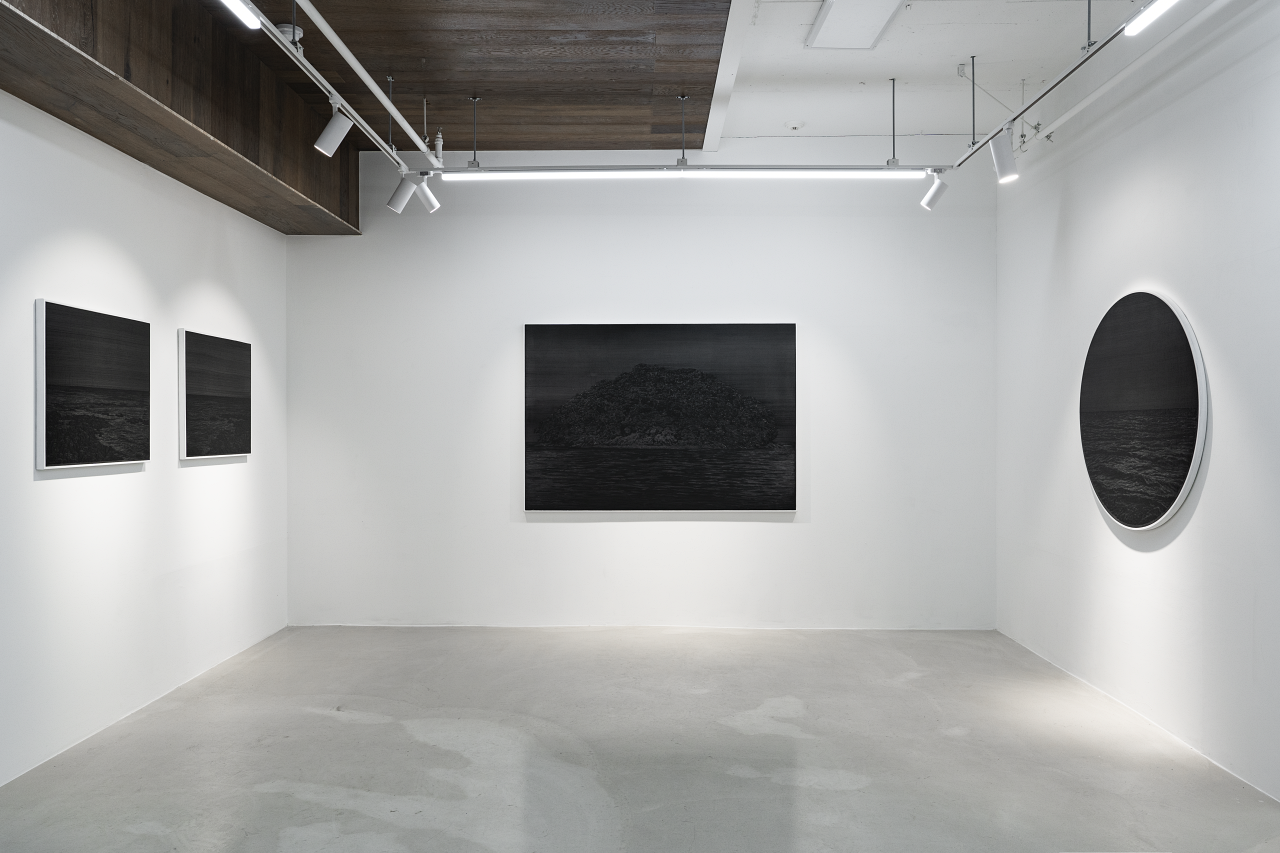
앞서 언급한 바와 마찬가지로 김현호의 작품은 한순간에 인지하기 어렵다. 흰색과 검은색으로 그려진 선명한 자연이 그을음(carbon black)으로 뒤덮이며 캔버스에 세밀히 채워진 모든 것을 다시 덮고 비우는 단계를 거친다. 작가가 작품을 창작하는 과정이 계속해서 캔버스 위를 채우는 과정처럼 보이지만 사실은 채우고 비우는 단계를 거치는 것이다. 채우고 비우는 모든 과정이 순환하면서 외딴섬, 고요한 바다, 마주 선 폭포와 산, 그리고 땅의 주름까지 이어진다. 작품을 바라보는 이는 작가가 건네는 와유의 시간 속에서 채우고 비움의 반복을 통해 보지 못했던 마음속 이야기를 꺼낼 수 있는 가능성을 찾게 된다.
Kim Hyunho’s solo exhibition Full or Empty, held at Roy Gallery, presents a selection of the artist’s recent works from his ongoing project Painting Research, which seeks to expand the boundaries of Korean painting. Through black paintings that are difficult to capture with a camera, the artist invites viewers to encounter images that only become visible through bodily experience.
Trained in Korean painting, Kim explores the meaning of hyeon (玄)—the ink-black color symbolizing all colors—while emphasizing tactility over flatness by exploiting the material thickness of acrylic paint. His paintings, with their pronounced matière, resemble reliefs rather than conventional flat surfaces. Viewers instinctively move closer to discern the dark images, yet the nearer they approach, the harder the subject becomes to perceive, prompting them to step back again. This process of shifting the body—forward, backward, and sideways—over time offers a mode of viewing that differs markedly from the conventional experience of perceiving a painting from a single, fixed viewpoint.
The black natural landscapes Kim paints are imbued with the spirit of wayu—the tradition of “reclining travel,” in which landscapes were painted and hung indoors to bring nature into one’s living space. While his works appear to be fully “filled” with blackness, they simultaneously present “empty” landscapes that create space for the viewer’s intervention. Rather than delivering a clearly depicted subject or speaking directly to the viewer, these paintings seem to have already spoken all they wish to say and then gently withdrawn, ready to listen instead. When indoor lights are turned off, the sudden absence of light renders the surroundings invisible; yet as time passes and our eyes adjust to the darkness, the space slowly begins to reveal itself. From the largest silhouettes to finer details, recognition gradually replaces fear, giving way to a sense of reassurance that comes with perception.
Likewise, Kim Hyunho’s works resist immediate comprehension. Clearly rendered natural forms in white and black are repeatedly covered over with layers of carbon black, undergoing cycles of concealment and erasure. While the artist’s process may appear to be one of constant accumulation, it is in fact a continual rhythm of filling and emptying. This cyclical movement extends across his imagery—from isolated islands and silent seas to facing waterfalls and mountains, and even to the folds of the earth itself. Within the time of wayu that the artist offers, viewers may discover the possibility of drawing out unspoken stories from within themselves, through the repeated experience of filling and emptying.