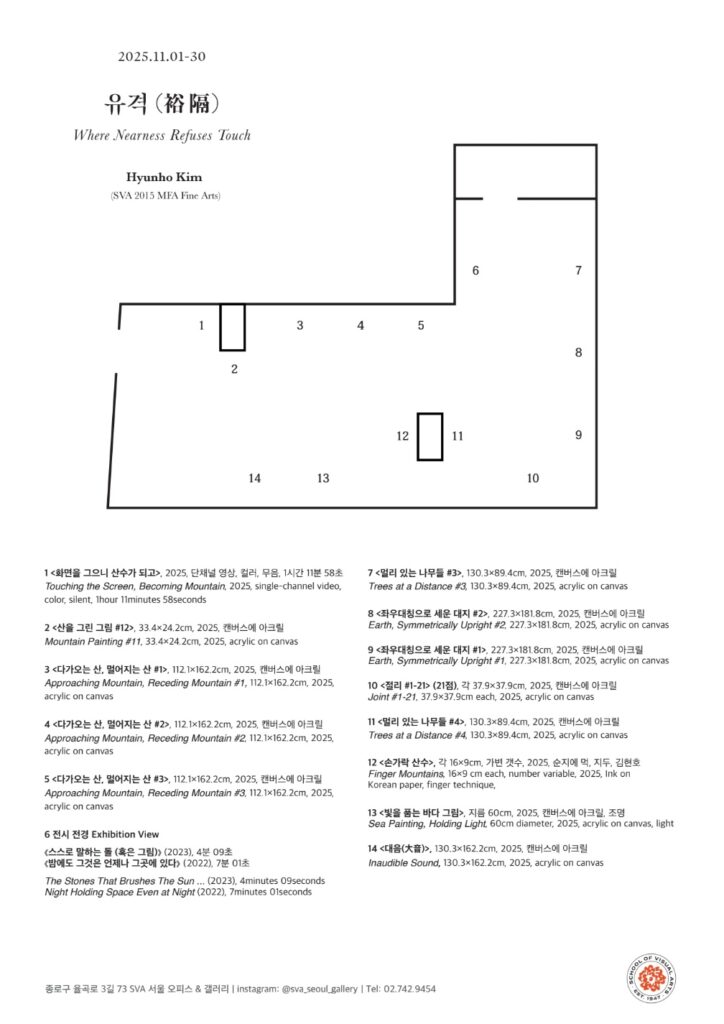
유격(裕隔) – Where Nearness Refuses Touch
유격(裕隔) – Where Nearness Refuses Touch
2025. 11. 1. – 11. 30.
SVA SEOUL GALLERY (Seoul, Rep. Korea)



작가노트 | Artist Statement
《유격(裕隔)》
현재 우리는 검은 유리에 맺힌 RGB의 빛의 상들과 텍스트로 채워진 가상의 세계에서 세상 대부분을 인지한다. 그곳은 멀리 떨어져 있는 것을 연결해 주는 공간처럼 보일지 모르지만 팔조차 뻗어 만질 수 없기에 사실상 ‘곳‘이라고도 할 수 없는 무(無)공간이라 할 수 있다.
현실의 물리 세계에서 딱 달라붙어 있는 두 개의 물체는 겉보기에 하나 같이 보일지라도 두 개의 대상 사이에 언제나 미세한 유격(裕隔)*이 있다. 아무 일도 일어나지 않아 보이지만 미시적으로 관점에서 그 틈을 보면 서로를 파괴하지 않을 만큼 밀어내고 의존하며 균형을 유지하고 있다. 따뜻해지면 팽창하고 겨울이 오면 수축하는 두 개의 물체는 그 유격을 좁혔다가 넓히고, 흔들리는 외부 환경 속에서도 서로를 다치지 않게 해주는 안전 공간으로 역할을 하기도 한다.
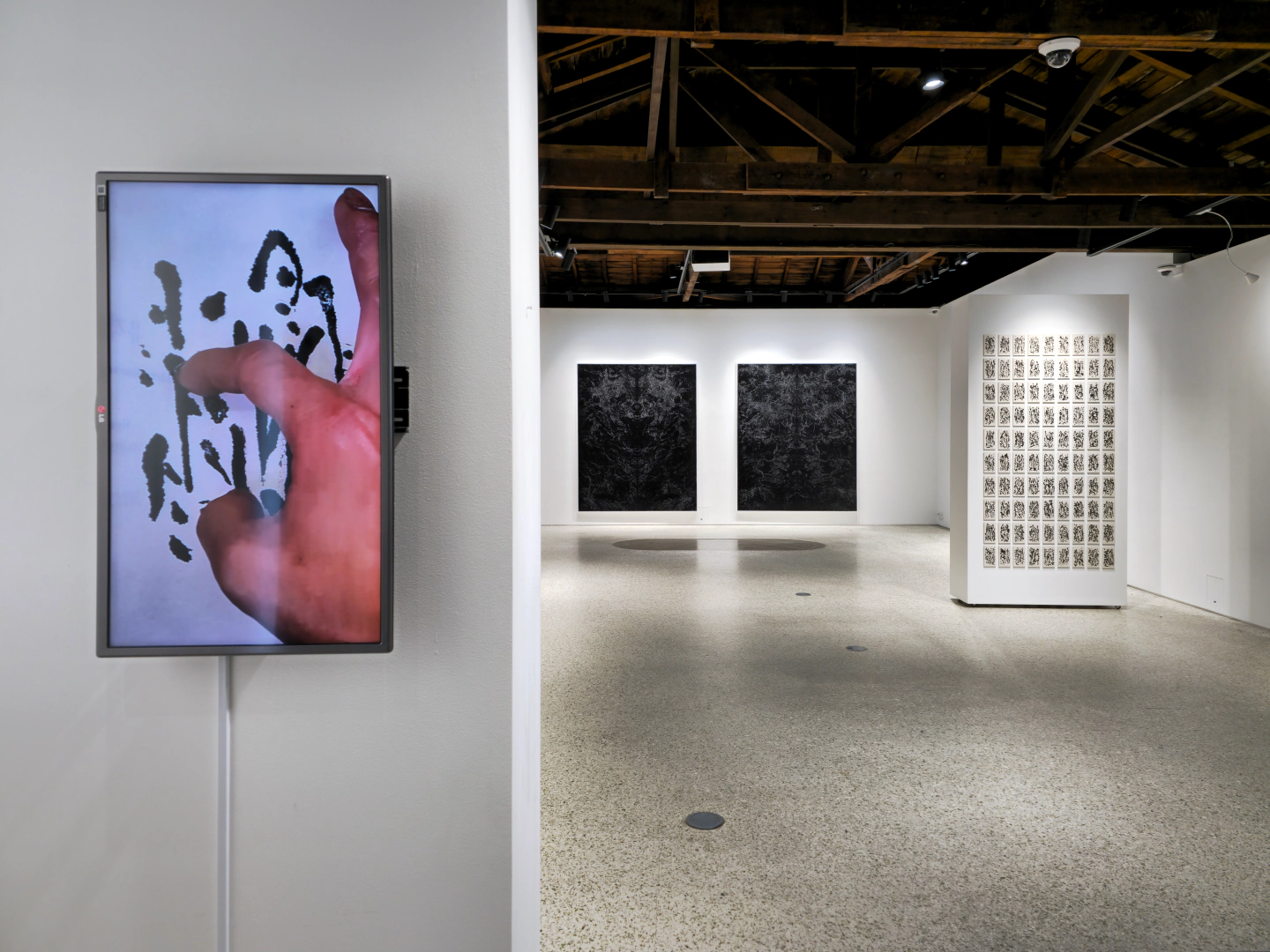
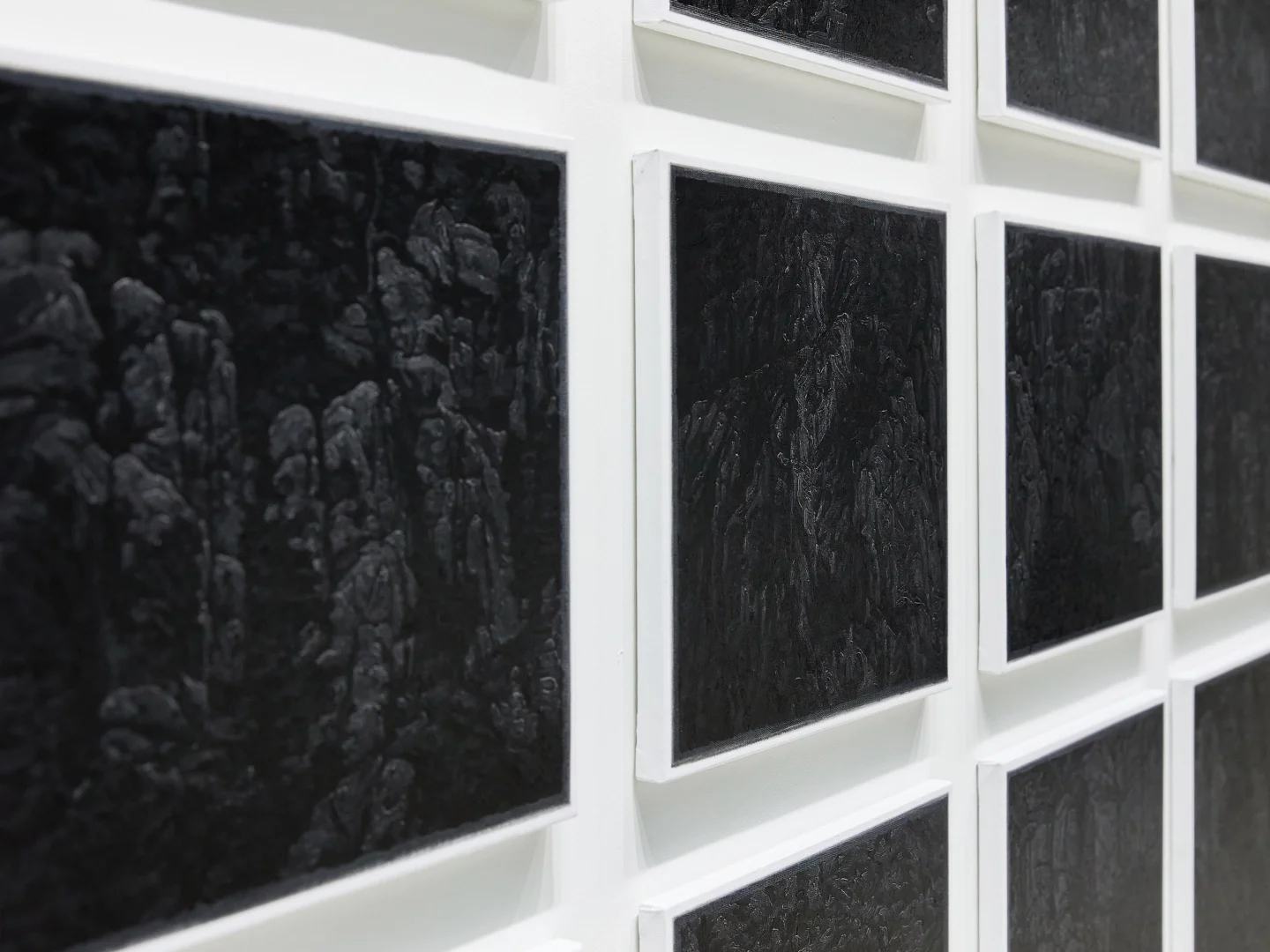
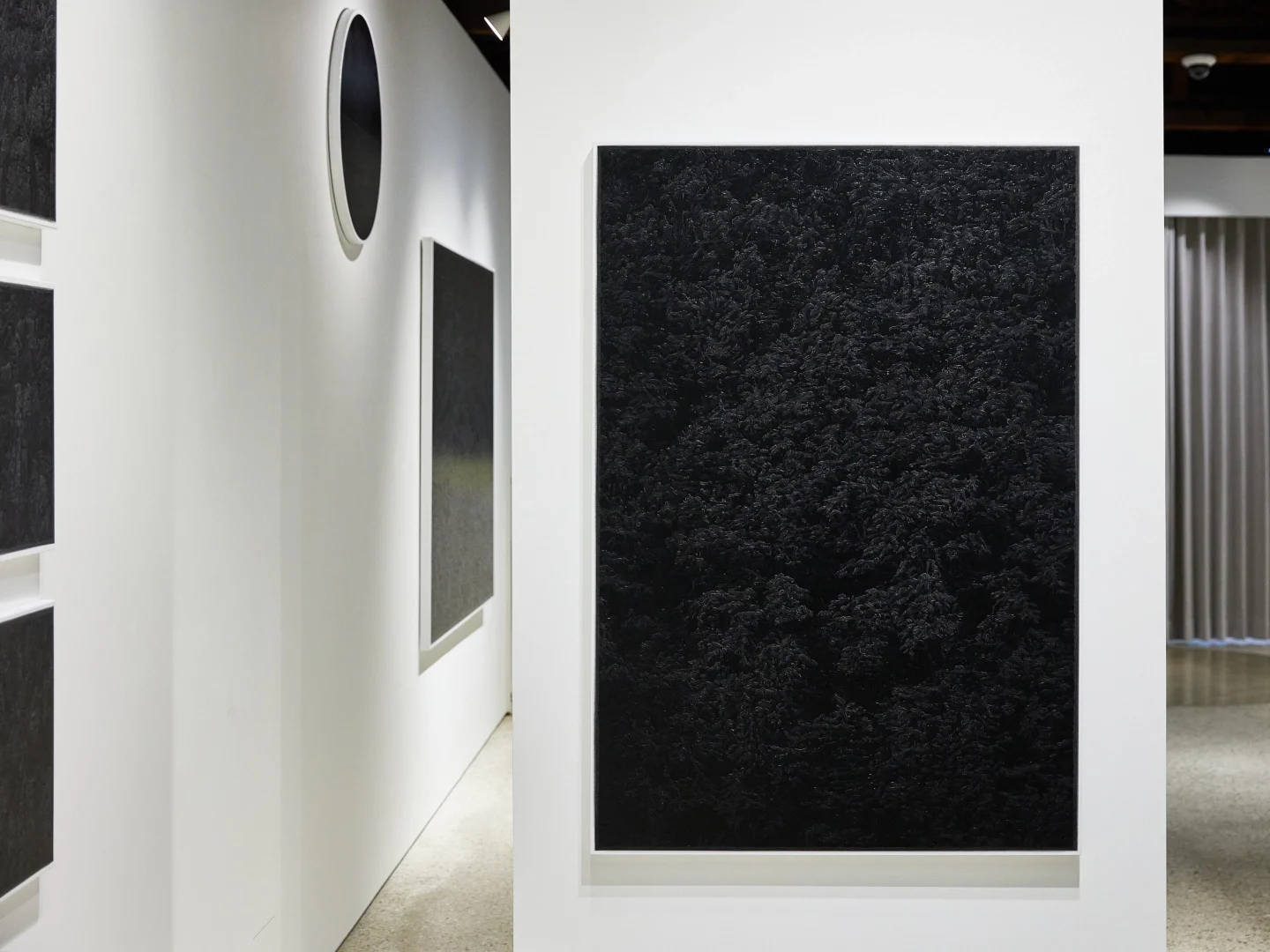
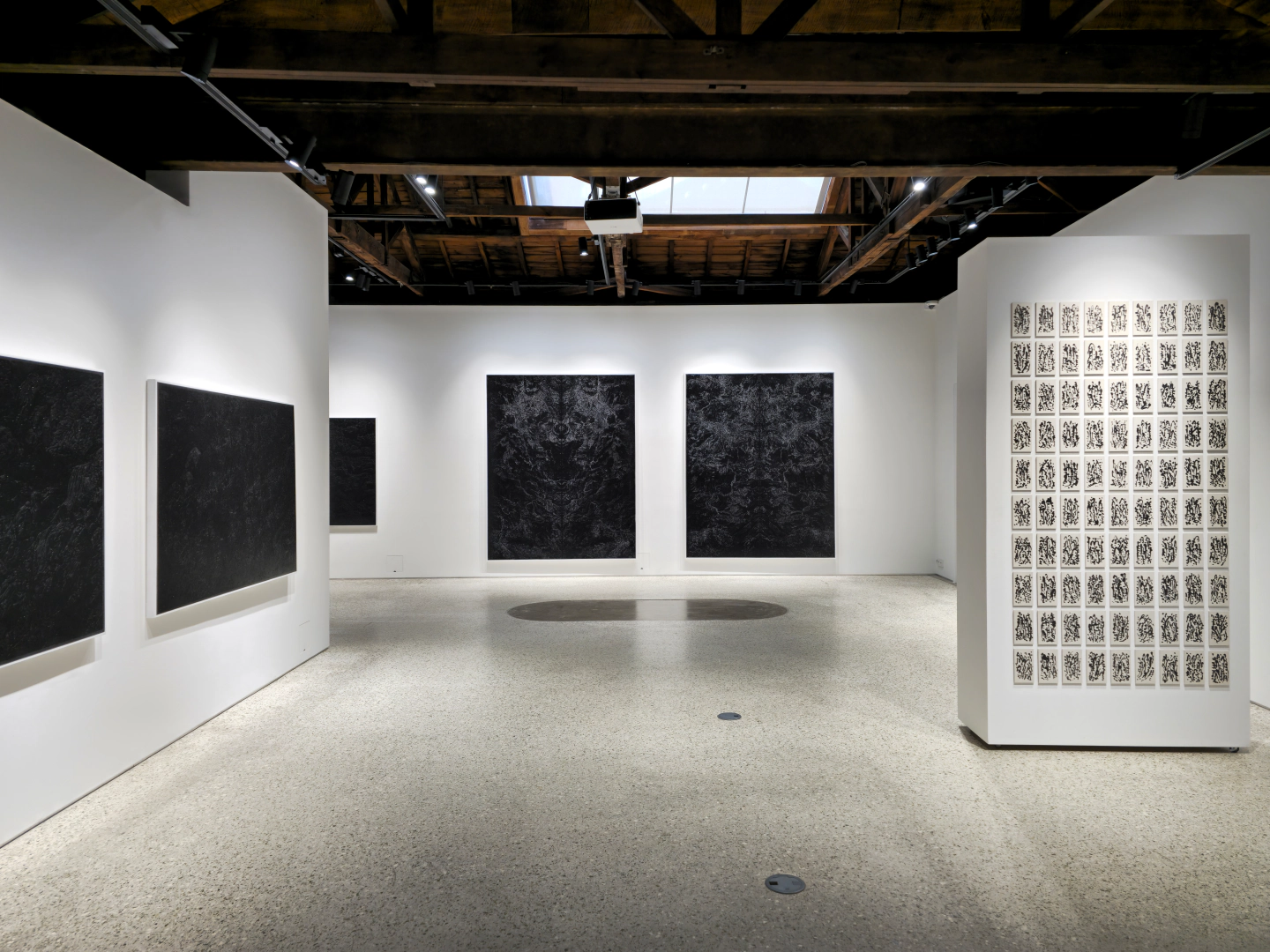
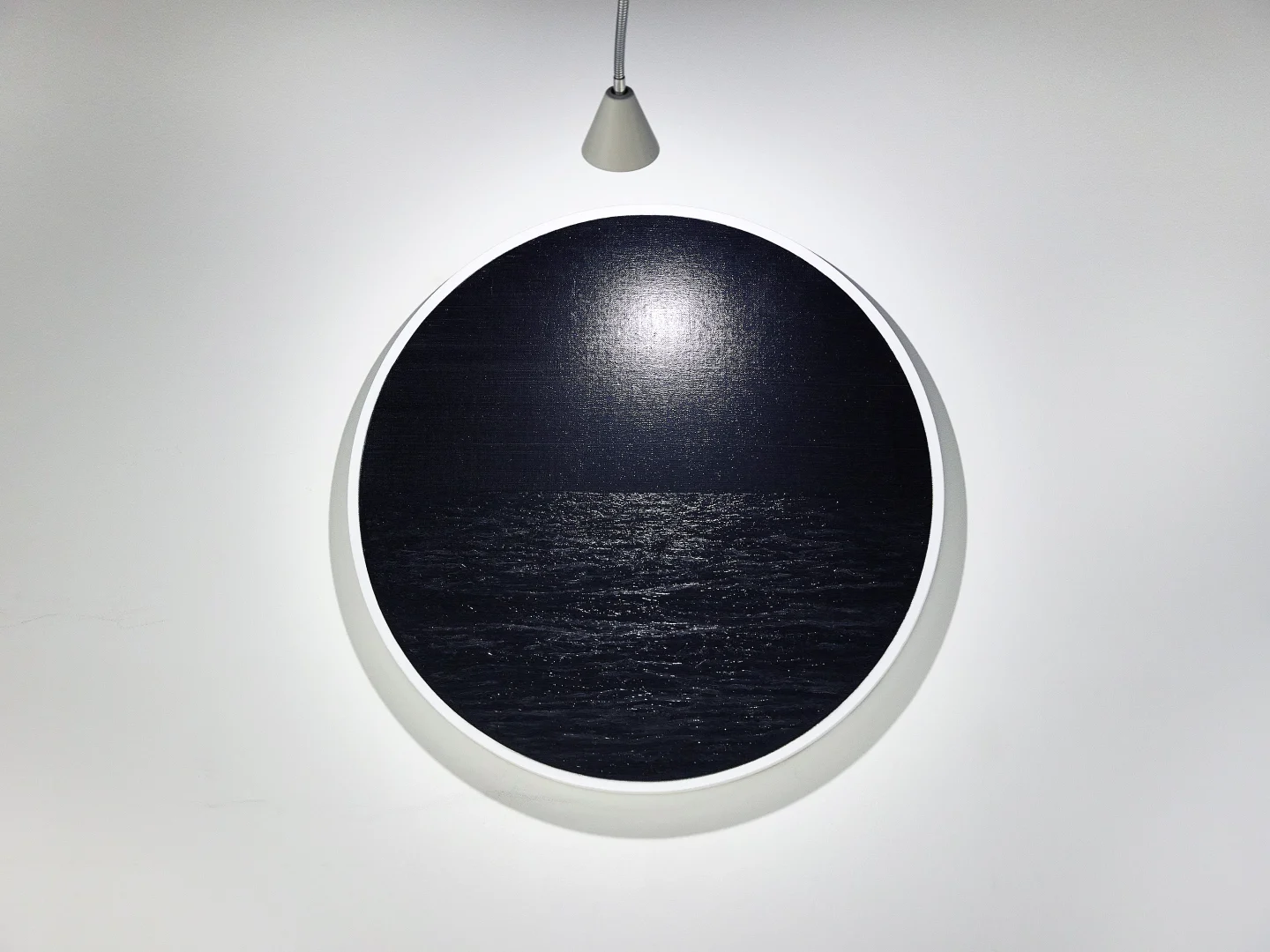
나의 작업은 이러한 유격을 지향한다. 이 유격은, 그림 내적으로는 어둠으로 인해 가시광선이 사라진 공간을 말한다. 밤바다를 보고 무작위적 무한한 서사가 마음속에서 생성되는 것과 같이 색의 정보 값이 빠진 검은 화면을 대면한 관객들에게 능동적으로 그 자리를 채우고 비울 수 있게 마련한 환대의 자리이다. 작품 외적으로는 작품과 신체 사이의 거리를 말한다. 언뜻 보면 단색의 검은 사각형으로 보이지만 그려진 요철과 그로 인한 광택으로 끌어들이고 다시 그림으로부터 밀어내는, 움직임으로 사유하는 공간이다.
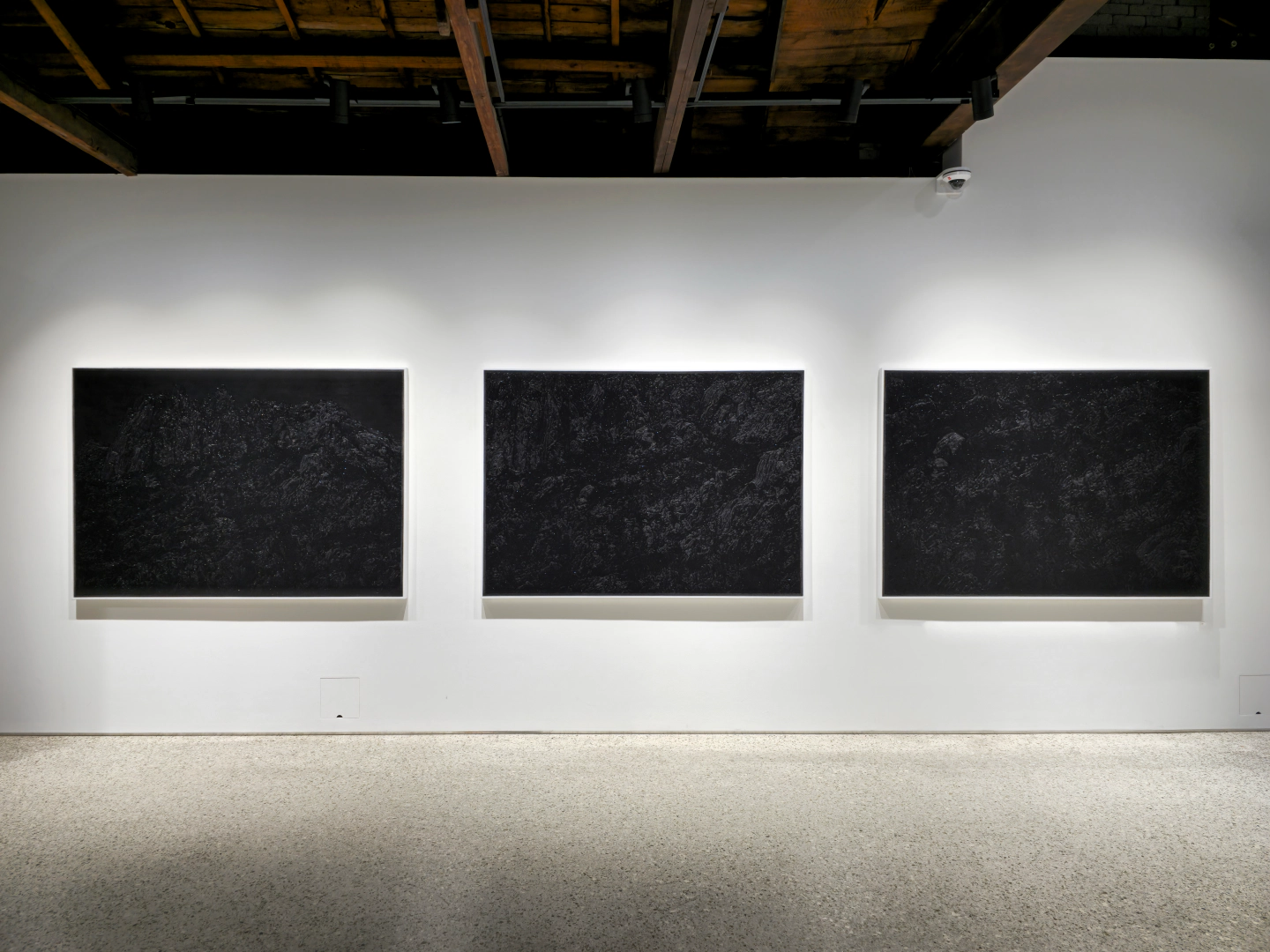
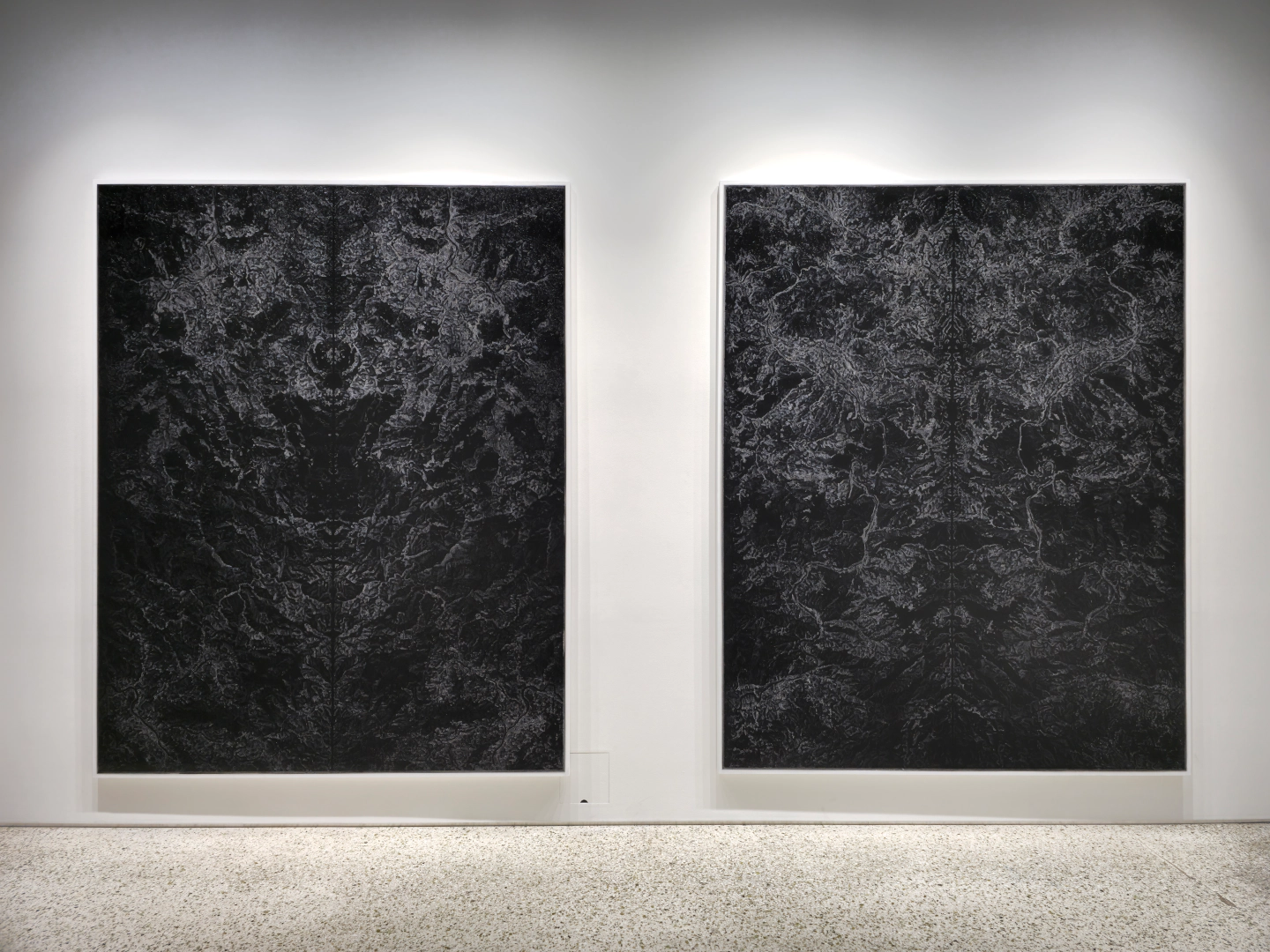
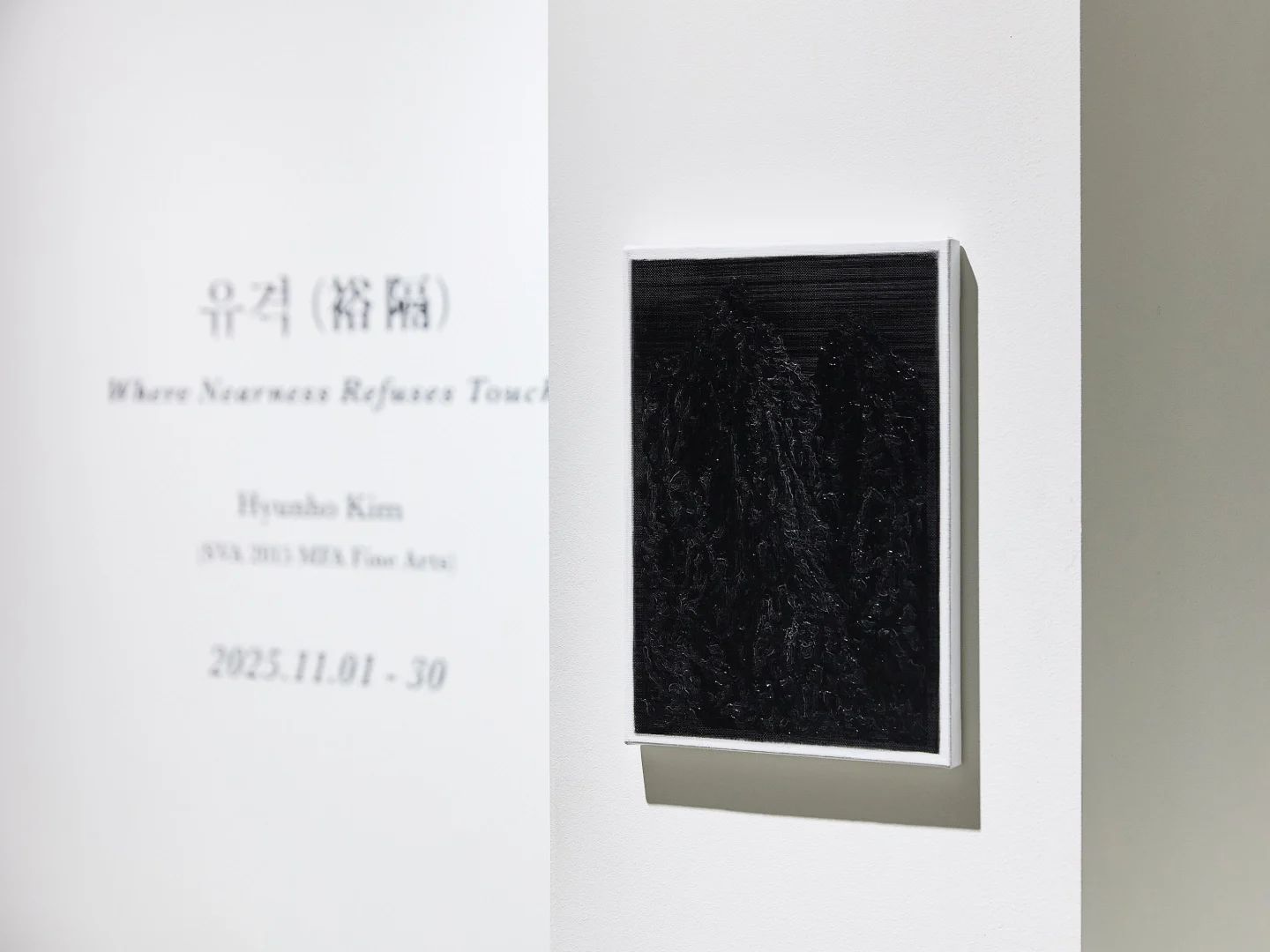
이번 전시를 위해 그린 대상은 대지, 절리, 산과 나무들 등 중력에 의해 언제나 우리와 연결되어 있지만 망각의 관성에 빠져있는 것들이다. 이러한 자연은 빛이 사라지고 밤이 되어도 그 자리에 우리와 거리를 유지한 채 거기에 있다. 마찬가지로 그림은 불이 꺼지고 어둠이 내려도 물질로써 이미지를 간직한 채 그 자리에 그대로 있다. 눈을 감고 팔을 뻗으면 만져지는 거리, 두 손가락으로 확대, 축소될 수 없는 이 물리적 거리가 있기에 나의 회화는 가상과 신체의 경계에 놓여있다고 할 수 있다.
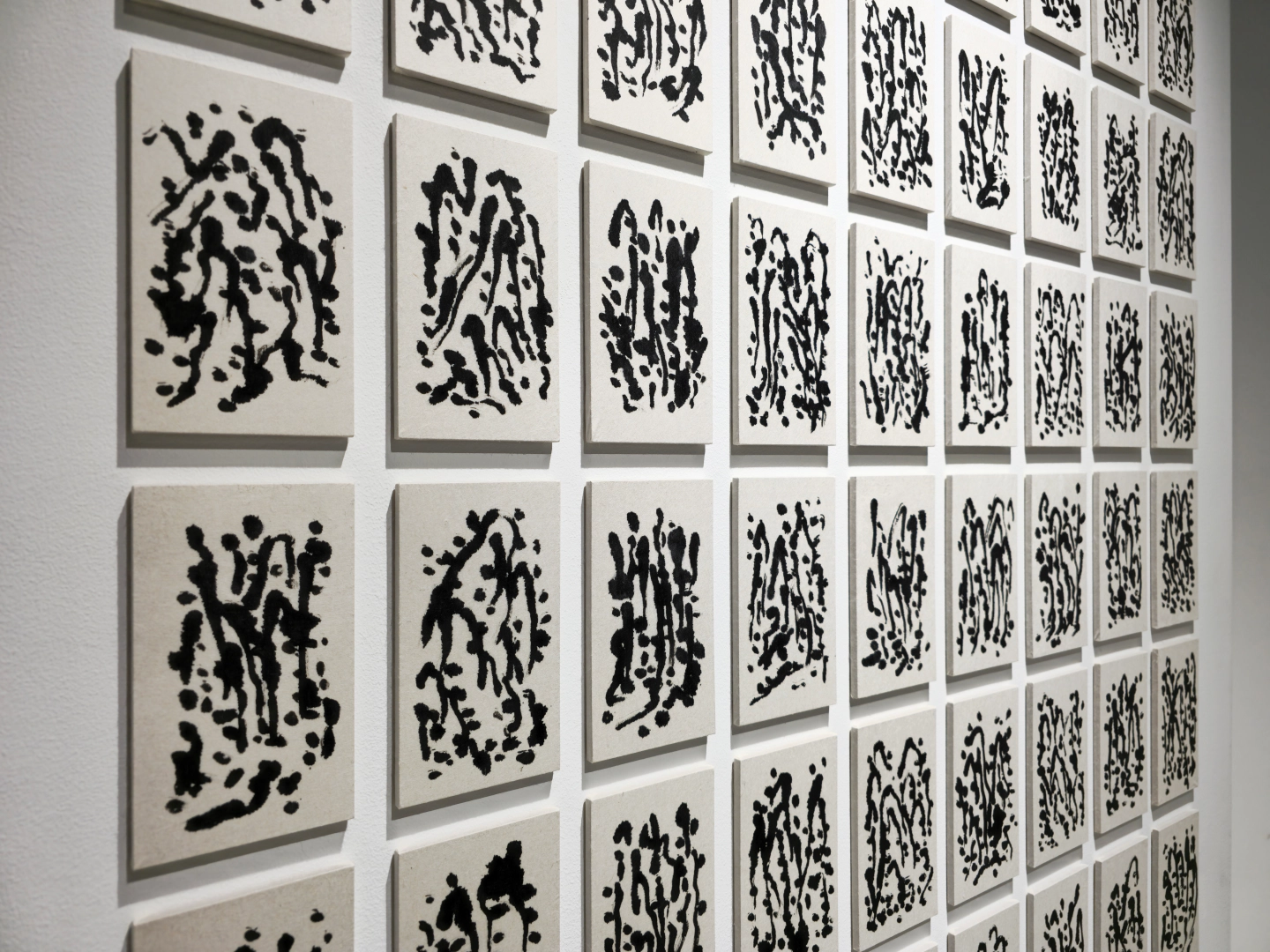
내가 그리는 것을 감히 대자연이라 칭하지 않고자 한다. 다만 시각을 포함한 몇 가지 인간의 감각으로 인지할 수 있는 자연의 표면을 탁본 뜨듯이 겸허히 옮길 뿐이다. 천지불인(天地不仁). 자연은 인간에게 아무런 감정도 연민도 사랑도 없다. 그러한 감정을 느끼는 것은 오직 우리일 뿐. 그렇기에 우리는 무한히 자유롭다.
*유격(裕隔) : 원활한 기계장치의 작동을 위한 헐거운 정도
Where Nearness Refuses Touch
Today, we perceive most of the world through a virtual realm filled with text and RGB images reflected on black glass. It may appear to be a space that connects distant things, yet since we cannot even reach out and touch it, it can hardly be called a place—it is, in truth, a non-space.
In the physical world, even two objects pressed tightly together always contain a minute gap between them. Though nothing seems to happen there, on a microscopic level, each gently resists and depends on the other, maintaining balance without destruction. As temperatures rise, they expand; when winter comes, they contract. The gap narrows and widens, serving as a space of safety that protects both from harm amid the tremors of the external world.
My work aspires to this kind of play—a subtle looseness that allows tension and movement between things. Internally, this play refers to the empty space where visible light dissolves into darkness. Just as countless, spontaneous narratives arise in the mind when gazing at the night sea, I intend for the viewer—when confronted with a black surface stripped of color information—to actively fill and empty that space, a place of hospitality. Externally, it signifies the play between the artwork and the body. At first glance, the painting may appear to be a monochrome black rectangle, yet through its drawn textures and the subtle gloss they create, it pulls the viewer in and then pushes them away again—a space of reflection shaped through movement.
For this exhibition, I have painted subjects such as earth, rock fractures, mountains, and trees—entities that are always connected to us by gravity yet often lost to the inertia of forgetting. Even when light fades and night falls, nature remains there, keeping its distance from us. Likewise, when the lights go out and darkness descends, the painting, as matter, continues to hold its image in silence. The distance at which one can close their eyes and still reach out to touch it—the physical distance that cannot be pinched or zoomed with two fingers—is what situates my painting at the threshold between the virtual and the corporeal.
I do not dare to call what I paint “Nature”. Rather, I humbly transfer, as if taking a rubbing, the surface of nature that can be perceived through a few of our human senses, including sight. Heaven and Earth are not benevolent (天地不仁). Nature holds no emotion, no compassion, no love toward humankind. Such feelings belong solely to us—and therein lies our infinite freedom.
인터뷰 | Interview
도면 | Floor Plan